



The moving fountain: the curious story of Rome’s “tureen”
- September 11, 2026
- Navona area, What's On in Rome, What's On in Rome

For those of you who are visiting…
Read More by C. P.

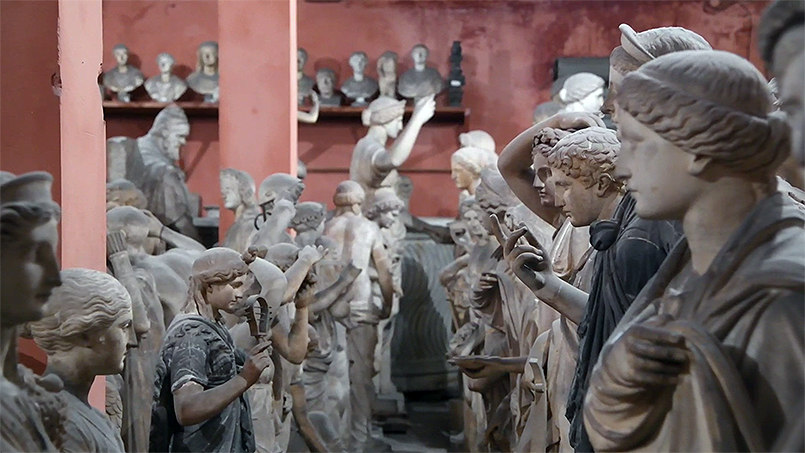
Along with the exhibition on Raphael, it should have been the great art event of the first half of 2020, but then Covid hit and all museums closed down: that’s why the first ever showing of the “long lost” Torlonia Marbles has even greater significance for Rome at this time.
This all-new display, called “The Torlonia Marbles: Collecting Masterpieces” will also be the first to be held at the Villa Caffarelli, the recently restored third location for the Capitoline Museums (as all other buildings, it sits atop the Capitoline Hill).
You will certainly be familiar with the Torlonia family, one of the great aristocrat dynasties of Rome: theirs is the majestic palace Benito Mussolini famously lived in during the fascist era, which has been turned into one of Rome’s loveliest city parks (and museums!).
That palazzo was obviously not the only Torlonia possession – they were art enthusiasts and even had their very own museum in Trastevere.
The entire collection there was comprised of 620 statues, most of them excavated by the Torlonias themselves on their properties scattered around Rome, from the Appian Way to ancient city of Portus, on the coast by Ostia and Fiumicino. However, the bulk of these marbles came from the Torlonias’ activity as… debt collectors. Indeed, being bankers, they had lent money to other noble families, which then had to repay their debts by passing them their art or their estates. That’s how the 620 marbles came to be one of the largest ancient art collections in Europe.
The Torlonia Museum in Trastevere closed in 1976 and the statues were bequeathed to the Italian government: so the public, as well as many reputable experts, have really no recollection of this wealth of statues, 92 of which will go on display starting October 14 and until June 21 (but we’re sure that many more exhibits will be set up, rotating the hundreds of marbles available!).
Famed archaeologist Salvatore Settis, who is the curator for this new exhibition along with Carlo Gasparri, had to say about the event:
The Torlonia collection is not only a collection of Greek-Roman sculptures of exceptional quality but also a “collection of historical collections”, which in its making crystallizes a cultural process, that of gathering ancient sculptures in private spaces and beyond.
This is a socio-cultural practice that had its beginnings in Italy and especially in Rome, triggering a vast process that would lead to the great royal collections, such as those of the Popes or the kings of France which led to the creation of a new institution, also starting in Rome, when in 1734 Clement XII founded the Capitoline Museums the first public museum in the world.
More information about the event can be found on the Torlonia Foundation website at this address (in English).

For those of you who are visiting…
Read More



The streets…
Read More

Join The Discussion