



Living like a local: a first-timer’s guide to everyday life in a Rome apartment
- July 27, 2026
- Uncategorized
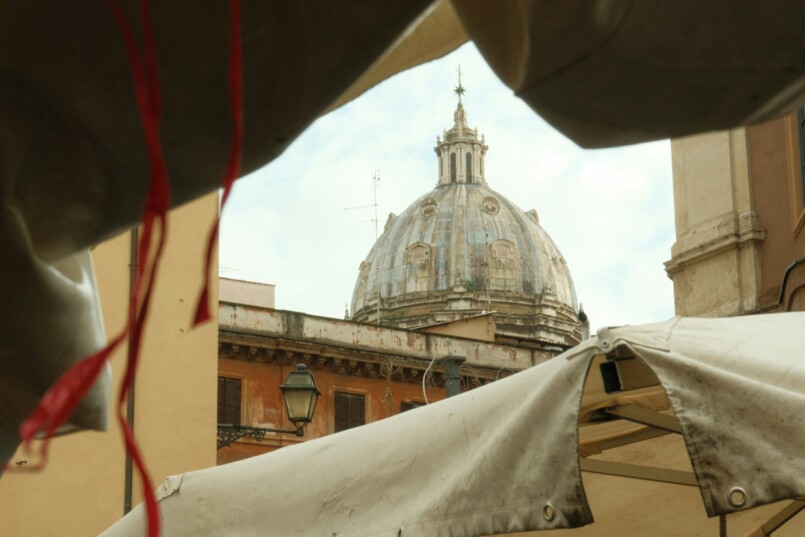
 by C. P.
Over the past few days, the first half of the massive renovation works involving the church of Sant’Ivo alla Sapienza were unveiled – even though they’re still ongoing, they are a very good signal for the city, as this Baroque masterpiece had been closed for 5 years, since it was partly damaged by the terrible earthquake that shook Central Italy in 2016.
For the time being, Sant’Ivo alla Sapienza remains accessible only during mass on Sundays at 11AM with access – at 1045AM from the entrance on Via del Teatro Valle. However we understand that this isn’t enough to quench your Borromini thirst, we selected 7 more buildings he built or worked on you can visit for free in Rome!
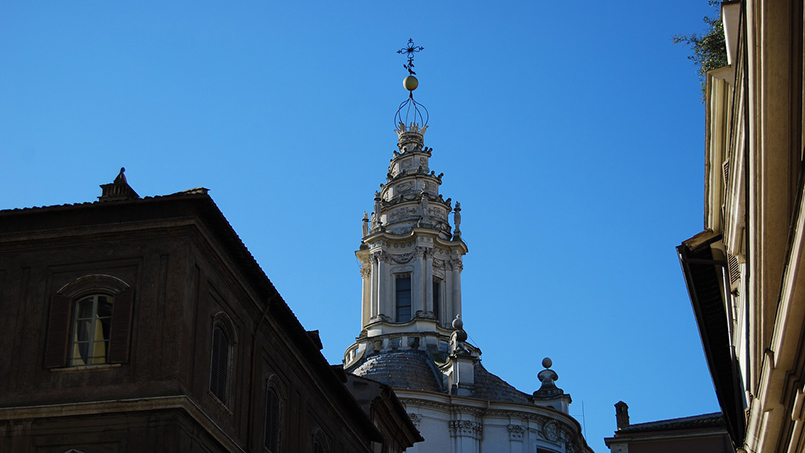
Much has been said about Borromini’s rivalry with Gianlorenzo Bernini – it’s the main thing that the general public knows about these two architects – but the truth is they were geniuses in their own right, had two wildly different styles and were unlucky enough to have to compete on a scene where everyone was looking to crown a heir to Michelangelo’s artistic throne. Borromini succumbed to the pressure, or to his own depression, or both: he took his own life on August 2, 1667.
… Which brings us to the first of many buildings that have ties to Borromini. Having committed suicide, Borromini wasn’t supposed to be buried in a church, but he did: his grave is in San Giovanni Battista dei Fiorentini, at the north end of Via Giulia. Why is that?
First of all, he was Carlo Maderno’s nephew and the great architect had also arranged to be buried here. Secondly, Borromini himself had worked on this building by completing the main altar and the family crypt for the rich Falconieri family, right below it. He was, in other words, very well known and exceptions were made for him.
While working here, he stayed on Vicolo dell’Agnello, the ancient name of none other than Vicolo Orbitelli.
Accommodation was convenient and was close to the main sites Borromini regularly visited, including Saint Peter’s – which is exactly what we provide with our own managed accommodations! See some of those we have available in the Via Giulia area here.
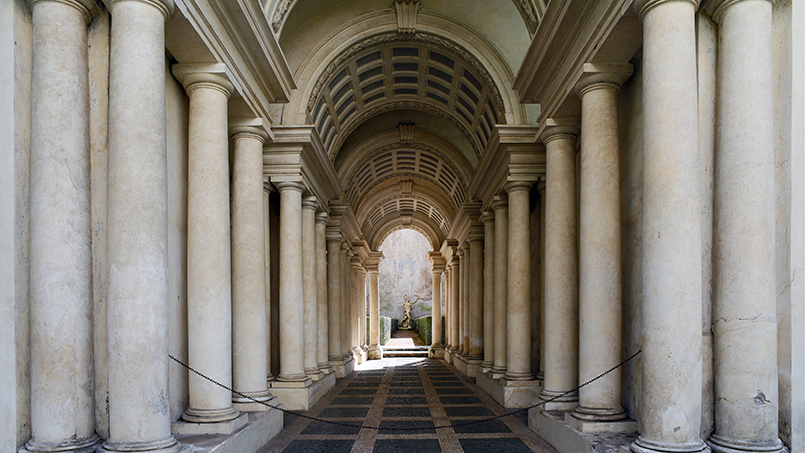
Technically you should pay a ticket to enter this building, which remains one of Rome’s most underrated art collections. If you cannot/don’t want to do that, try to sneak a peak inside the courtyard and marvel at the optical illusion there – the slant of the floors and the diminishing heights of the columns make the gallery appear longer than it is.
Borromini worked on this specifically so the palazzo, which was bought by Cardinal Spada, would have seemed much bigger than it actually was.
This church on Piazza Navona is unmissable and features the tell-tale sign of a Borromini work: a concave façade. Starting in 1652, Pope Innocent X decided to renovate the whole of Piazza Navona – a medieval church was in the same spot but it didn’t fit with the pontiff’s aesthetics, so Borromini was brought in to modernize it.
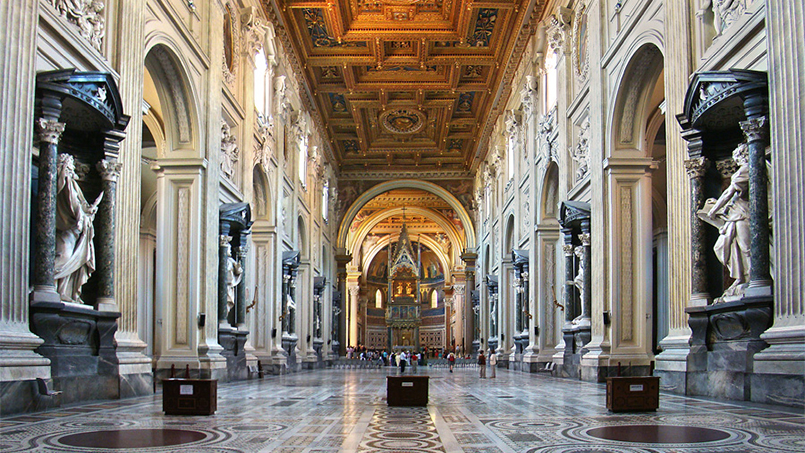
No, Borromini didn’t build this church – he was too busy working on St. Peter’s! However, if you notice some Baroque influences in the interiors of what is Rome’s oldest basilica, it’s entirely because of him. Borroming was tasked with redoing (much like Sant’Agnese in Agone) the spaces therein according to the style that was fashionable at the time, and they haven’t been redone or retouched since.
Also known as “San Carlino“, the nickname given to it by Romans as it was smaller than the other San Carlo church in the city center (on Via del Corso), this is arguably Borromini’s best known work apart from Sant’Ivo alla Sapienza. Surprisingly enough, this is an unfinished work (like the church of Santa Maria dei Sette Dolori on Via Garibaldi, also by Borromini). Take a look above you as you visit: Borromini kept working with optical illusions and the dome of San Carlino looks higher than it really is.
While this chapel is always closed and is recommended that you inquire at Rome’s official phone number 060608 to ask for ways to access it (by way of a group tour), we strongly advise you take a stroll to it anyway, even if it turns out to be hard to go in.
While it is probably Rome’s smallest church, it is also in a beautiful part of the city largely ignored by mass tourism. Time seems to have stopped still here and you can soak in the atmosphere of the area, which pilgrims used to pass through as they approached the Vatican area from the South of Italy. You will appreciate even more how Borromini thought of something modest, compared to the big basilicas of central Rome, for faithfuls to stop and pray at.
We would be remiss if we didn’t mention that Francesco Borromini was one of many architects working on the massive rebuilding of Saint Peter’s. The church we can admire today is partly his responsibility: he collaborated with Gianlorenzo Bernini on St. Peter’s Baldachin, plus he redesigned the interior of the archbasilica.


Join The Discussion