



The Colosseum and the Pantheon to open at night in August
- August 3, 2026
- Colosseum area, Pantheon area, What's On in Rome

 by admin
As you know, Halloween is not really a thing in Rome, or Italy for that matter. Sure, we put on costumes during Carnevale, which is a remnant of an old Roman celebration and doesn’t happen until roughly February (we say roughly because it lasts for several weeks!).
However, Halloween has made its way to these parts anyway, largely in schools and among the growing expat community. We explained it in a separate post last year.
Those who are visiting at this time of the year won’t be deprived of their Halloween frights, though – in addition to the displays of many shops in the center of the city and a number of Halloween-themed parties in clubs and bars, we thought we’d point you to three excellent spooky places in Rome, and to the reason why they scare generations of locals…
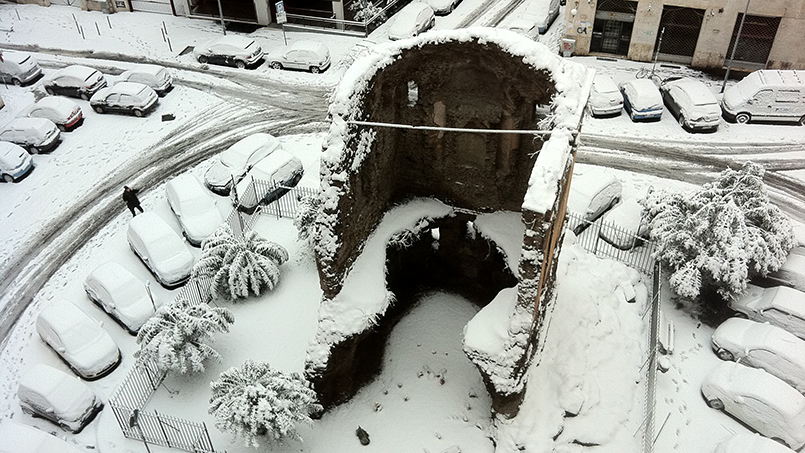
Originally a tomb for Emperor Hadrian’s freedman Elio Callistio, the location of this particular site (pictured above) betrays its closeness to the Via Nomentana, an ancient Roman way which is today one of the busiest in the city and which used to be the backdrop for many ancient graves.
Just a short subway ride away from the city center (the closest stop is “Libia” on the B1 line), these ancient Roman ruins on Piazza Elio Callistio crumbled and collapsed in a peculiar way, so much so that they look like a throne – and who sits among ruins on a chair so big? The Devil, here’s who!
This landmark also owes its name to the fires lit by beggars, shepherds or pilgrims who used to find a shelter here in the past centuries – the smoke and color from the flames, along with the shape of the mausoleum, were the source of this district’s sinister reputation, at least until the end of WWII. After that, the whole area became crucial for the expansion of the city, so all around the “Chair” are apartment blocks. But go after dark, and you can definitely experience an eerie atmosphere!
Donna Olimpia Maidalchini was not Roman born, but in spite of this she became, over time, one of the most well known Romans of all time: a powerful, scheming figure who consorted with the Pope of her time, Innocent X.
Unflattering portraits, imaginative reconstructions of events and even folk legends made her into a “pop” character, depicted as greedy, scheming and largely evil. In spite of this, a portion of the Monteverde district is named after her.
Not far from it, by Porta di San Pancrazio, look for a white marble arch at the beginning of the Via Aurelia Antica: nicknamed “Arco di Tiradiavoli” (literally, “Devilpullers”) it is said to be the place where a burning chariot carrying the ghost of Donna Olimpia passed, en route to the Vatican, with devils running after it to bring her back to hell.
A different version of this legend forgets about the devils, but says that if you stand on Ponte Sisto at around midnight (and particularly on January 7, the anniversary of the death of Innocent X), you will see her rushing to the Papal apartments, looking for more money to steal for herself.
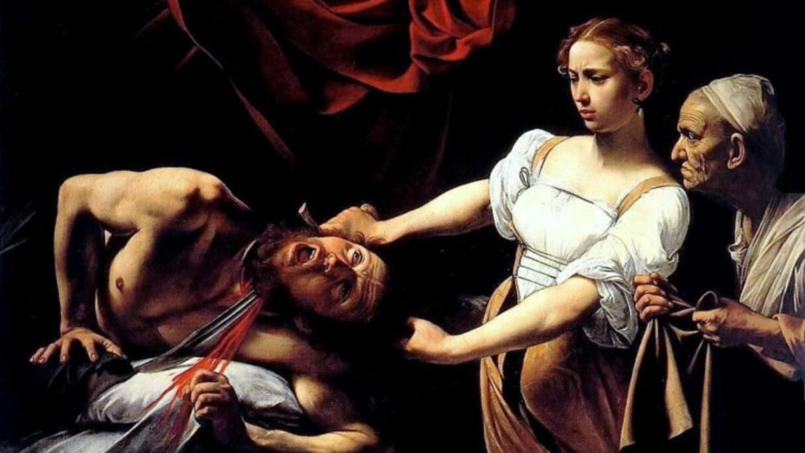
On September 11, 1599, Beatrice Cenci, her stepmother Lucrezia and her brother Giacomo were executed right outside Castel Sant’Angelo: they had been found guilty of killing Francesco Cenci, Beatrice’s father, a noble man who was know to be a sexual predator and murderer. The family was wiped out so publicly, in spite of a few members being minors, because the Pope of the time, Clement VIII, was after their properties (some of them still being visible to this day by the Jewish Ghetto).
The outrage was unlike anything seen before or since, with most of the population siding with the victim of the abuses, Beatrice.
After being tortured for weeks, she was beheaded by two distinct executioners, Mastro Alessandro Bracca and Mastro Peppe: the former died not two weeks after the execution itself, plagued by the guilt for what he had done. The latter was murdered a month after by Porta Castello.
Since then, the ghost of Beatrice is said to be haunting Castel Sant’Angelo, a former prison, while the sword used to behead the family was found in the river Tiber while building the Ponte Umberto I bridge, in all likelihood thrown down there by Bracca himself. You can see the sword here (page in Italian!).
As with the story of Donna Olimpia, whole books could be written about Beatrice Cenci, so watch this space for more posts dedicated to this tragic story from Rome’s baroque era!




Join The Discussion