

 by
by 

Living like a local: a first-timer’s guide to everyday life in a Rome apartment
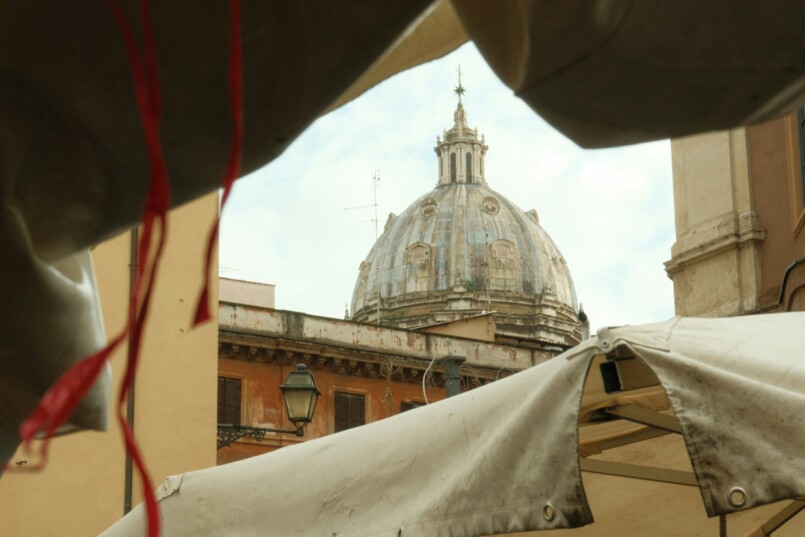

Of course Rome has a number of world-famous attractions, landmarks and museums: we all know them, we can recognize them when we see them in pictures, we can even list a few tricks to visit them without the hassle of the big crowds!
And yet, for some tourists, these museums aren’t enough. Some are return visitors, and want to go around Rome at a slower pace, without being pushed and shoved from corridor to corridor. Some are natural born explorers, and they would like to see something with a more local feel. Some, finally, just want more from their experience in the city!
The good news is: Rome has over 200 museums! Some of them are open permanently, some just do if you book your visit. Some are state-owned, some belong to the city, and some are private collections.
There is something for everyone in this giant list, so we have selected the 5 minor (and smallest!) museums in Rome for you to visit. They’re not just special because they’re small – they shed a different light on the city’s history and territory and therefore are extremely recommended!
This odd-looking (for Rome!) church, called “Sacro Cuore del Suffragio”, is on the Lungotevere Prati, close to the Ara Pacis museum and is immediately recognizable. However, just a few people know what’s inside of it.
In 1897, a few years after being built, the church almost burned down, and while trying to salvage what he could, missionary and founder Victor Jouet thought he saw a human face in the remains of a Bible behind the burned altar.
That was the episode that convinced him that the holy souls in purgatory (hence the name of the museum) were trying to communicate with the living, so as to gain access to heaven. So he started to collect artifacts that demonstrated these attempted contacts, in the form of singed prayer books, items of clothing or other items “touched” by these trapped souls.
Visit it to: understand the power of religion in the last centuries.
Lungotevere Prati, 12. Opens everyday except Sundays from 7 AM to 12 noon and from 4 PM to 730 PM.
If you ever crossed Corso Vittorio Emanuele going to and fro Campo de’ Fiori and Piazza Navona, you must have noticed this museum, which takes the whole building at the corner with Via dei Baullari.
Named after the collector who donated all of his antique statues to the people of Rome, it even houses Roman remains in its underground levels. On top of its lovely permanent collection, it features interesting art/photography exhibitions.
Visit it to: discover a precious collection of statues just steps from some of Rome’s most important landmarks.
Corso Vittorio Emanuele II, 168. Opens daily from 10 AM to 4 PM, except on Mondays.
Also known as “Museo di Via Tasso”, because of the street where it is found, it’s a painful reminder of the Nazi occupation of Rome in the last years of WWII – it is located in the cells of the SS-run prison in the city.
Walking distance from the Colosseum and San Clemente (plus several other basilicas!), the visit lasts for an hour on average, but it is absolutely unforgettable.
Visit it to: learn about a page of our recent history.
Via Tasso, 145. Opens daily from 9 AM to 7 PM
At the bottom of the Spanish Steps, the second floor of this building houses the apartment where John Keats died in 1821. The building should have been torn down at the start of the 20th century, but it was saved by the awareness-building campaign of an association of intellectuals.
As a museum, it houses objects belonging to both Keats and Percy Bysshe Shelley, as well as a library on the English Romanticism.
Visit it to: discover the Roman lives of two early expats!
Piazza di Spagna, 26. Opens daily from 10 AM to 1 PM and from 2 PM to 6 PM (not on Sundays)

In the outskirts east of the center, this museum consists of only two rooms, but what rooms they are!
The biggest one is really a warehouse built over a beautifully preserved Pleistocene dried up river bed.
Discovered by accident while building an apartment complex in the 1980s, it revealed a number of fossils and remains from several species that were once common in the plains around Rome: mammoths, hippos, deers and – of course – some of our ancestors.
The visit consists of a number of projections highlighting part of the river bed as visitors listen to the story of how the area used to be like millions of years ago. We recommend contacting beforehand the heads of the museum to ask whether the projections also come with English audio.
Visit it to: learn about Rome before the Romans!
Via Egidio Galbani, 6. Opens from Tuesdays to Fridays, from 9 AM to 2 PM and from 10 AM to 2 PM on Saturdays and Sundays. Booking is mandatory (phone no. 060608)


Join The Discussion