



Rome with reduced mobility: an honest guide
- September 3, 2026
- Museums, Piazza Venezia area, Spagna area, Trevi area
 by C. P.

Everyone knows that, according to tradition, ancient Rome was built around and on seven legendary hills: the Aventine Hill (Aventino, in Italian), the Palatine Hill (Palatino), the Capitoline Hill (Campidoglio), the Caelian Hill (Celio), the Quirinal Hill (Quirinale), the Viminal Hill (Viminale), and the Esquiline Hill (Esquilino).
The truth is, however, more complex than that, and even tourists who just got out of the train station at Termini can see that the city is hilly… all over! Yes, there are many more hills in the city, and some of them have a fascinating history. If you care to read on, we have picked out seven more hills you need to know about!
As much as modern Romans like to call it “our unofficial eighth hill”, the Janiculum was very well known to their ancestors: Romulus fought on it, King Ancus Marcius made a fort out of it, Julius Caesar had a magnificent garden on its slopes (so much so, to this day a street by the train station in Trastevere is still called “Via degli Orti di Cesare” – “Caesar’s gardens way“, roughly. An important landmark for religious (it is named after the god Janus, after all!) and military reasons, it is the highest hill in central Rome, and visitors from all over come to enjoy the breathtaking views of the most important landmarks. It is uphill from Trastevere.
Closely linked to the Janiculum (for some, it is part of the same hill!), Monte Verde (but the Romans also called it Mons Aureo, “Golden Hill”) is now spelled “Monteverde” and is the site of a wealthy neighborhood of the same name. In ancient times, it was a quarry where tufa stone was quarried, the colors of which were so different that the area now owes its name to this humble type of stone. Repeat visitors to Rome prefer this quieter area to the always busy and noisy Trastevere, even though this area was largely built after the Second World War and doesn’t have the medieval charm of its neighbor. We recommend taking a stroll through its central part (Via Giacinto Carini, Via Felice Cavallotti are some of the street names…) for shopping or for excellent food and drinks. The area is a short walk uphill from south Trastevere or can be reached by bus or city train (the stop is called Quattro Venti).
This nondescript hill that Romans bike or walk over near the Vatican has a long and complex history, starting with its name – Ciocci is actually a misspelling of Ciocchi, none other than the family name of Pope Julius III, who once owned a Renaissance-era villa here (the villa is now destroyed, with only one of its towers still standing – the Torre della Luna). This part of Rome was also famous for being used (again!) as a quarry for the reconstruction of St. Peter’s Basilica. Less than 100 years ago, this was also a Nazi outpost in occupied Rome… There are so many stories about this part of the city! Today Monte Ciocci is part of the Monte Mario Natural Reserve. It can be reached by subway, city train (“Valle Aurelia”) and a number of different buses. Read more about it in this older post.
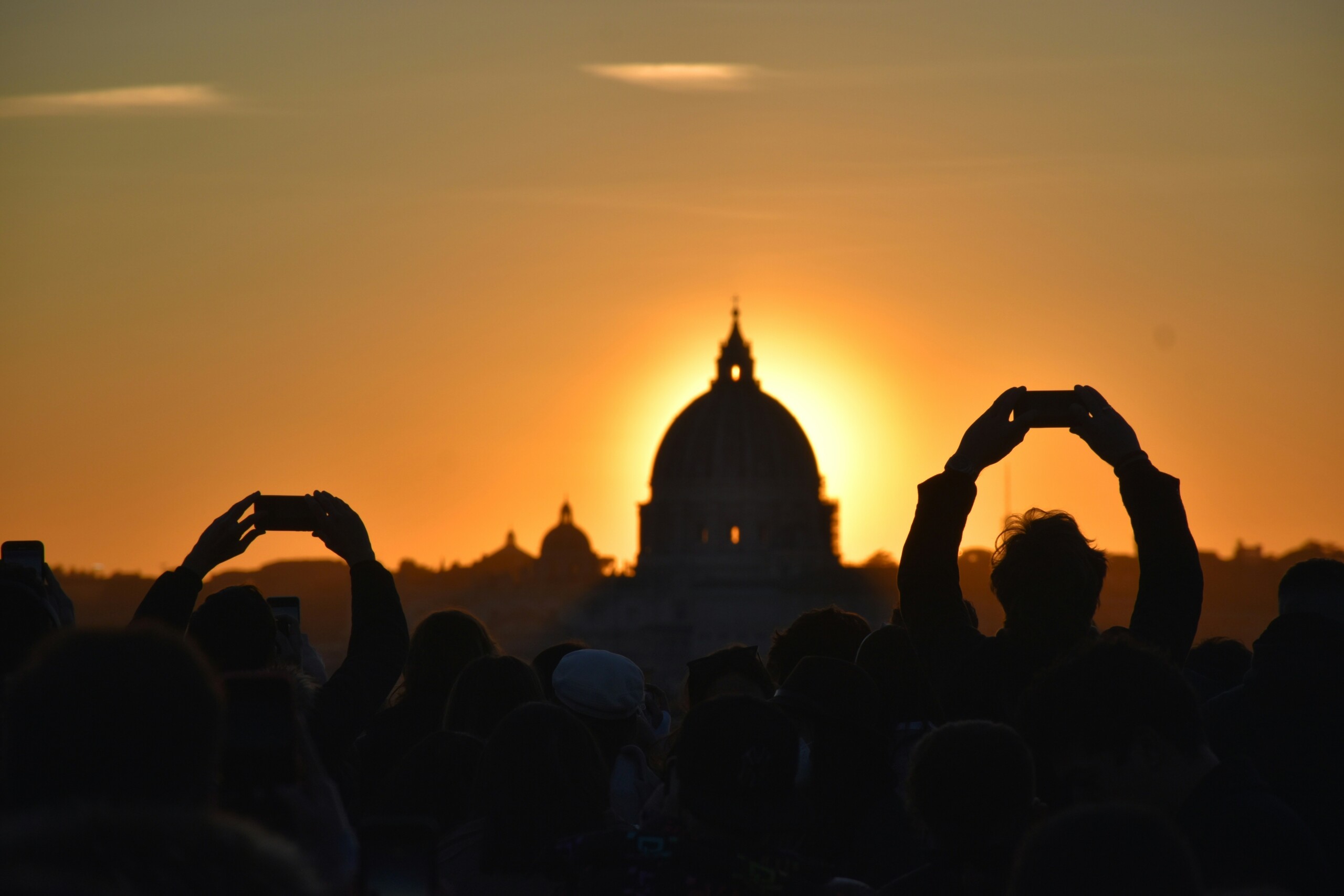
Here it is, the highest hill in Rome (although for the ancient Romans this was “enemy territory” and very much out of town!): 456 ft tall, about 140 meters. It owes its name to one of the parties in the civil war between Marius and Sulla, and it houses a nature reserve – a testament to how much of the hill’s wooded area has been preserved to this day. At the same time, Monte Mario is densely populated, with much of the modern city’s residents choosing to live here for its parks and quality of life – a city within a city. Monte Mario is also home to the French War Cemetery. It is uphill from the Olympic Stadium, and it can be reached from the city center by bus or city train (with the main station called “Roma Monte Mario”), or you can cycle through it using the bike path that also goes through Monte Ciocci.
Another legendary hill in the history of pre-imperial Rome, Montesacro is said to be the place where none other than Menenius Agrippa convinced the plebs who were rebelling against Rome to come to an agreement with the ruling classes. Today, Montesacro is an affluent neighborhood with plenty of nightlife options for those in the know.. We wrote about this here.
Is this a mistake? Could the Vatican really be a hill? Indeed it is: but with the amount of demolition that has taken place (especially under Emperor Constantine) and the number of buildings within Vatican City proper, it is hard to imagine the hill that once stood here. Visitors to the necropolis under St. Peter’s can get an idea of what the place looked like – you can read about the necropolis at this address.
Despite its location in the very center of Rome, the Pincian Hill was never considered one of the original seven hills and was only incorporated into the city after the construction of the Aurelian Walls. Many wealthy figures of pre- and post-imperial Rome had their villas on this small hill, which remained largely abandoned through the ages until Scipione Borghese moved his personal art collection here (the Borghese Gallery!) and the genius architect Giuseppe Valadier designed the Villa Borghese park the way as we know and love it today.


Join The Discussion