



The moving fountain: the curious story of Rome’s “tureen”
- September 11, 2026
- Navona area, Navona area, Rome 101, Rome 101, Rome 101, The city center, The city center, The city center, What's On in Rome

For those of you who are visiting…
Read More by C. P.
There is a fact that is particularly true regardless of your being a repeat visitor to Rome and Italy: you will find that you’re more and more interested in exploring off the beaten path destinations, escaping the masses to build your own idea of the country. This includes finding obscure locations and odd places – the lifelong dreams of noble men and artists alike that have come alive in or near Rome.
Well, the good news is – you’re in luck! The immediate territory around Rome is home to a number of what us locals call “secret gardens” or “ideal cities”. Sometimes they’re exactly that: utopian places where fantasy and imagination run free, that overtime have been transformed into a tourist attraction. In this post, we will talk about some of the most easily reachable “oddities” near Rome.
If you’re looking for hidden wonders, bookmark this useful website and browse through it to find places to visit during your Italian travel. We love it and use it from time to time to plan our own daytrips!
With that out of the way, our first recommendation is for a monastery funded by none other than Saint Francis who was expanded into becoming an, indeed, ideal city. The lifelong project of architect Tomaso Buzzi, it incorporates surrealist, medieval and classical elements and, more importantly, philosophical messages or ideas. After Buzzi’s death, his nephew – a Marco Solari – lives in the compound and shows the guests around.
How to visit La Scarzuola: There’s a mandatory booking policy and tickets can be bought online at the monument’s official website. Not a convenient destination if you can only travel by public transport, La Scarzuola is by Montegabbione, near Terni.
Fascist summer camps are one of Italy’s most fascinating type of buildings, well documented in a photo essay called “Fascismo abbandonato”, by Dan Dubowitz. One of the ones not featured in the book is by the town of Giano, once again in the Umbria region, and was reclaimed, after dozens of years of neglect by artist and journalist Vincenzo Sparagna, who had conceived this literal “micro-nation” together with Andrea Pazienza, one of Italy’s most famous comic artists.
Technically called “Repubblica di Frigolandia”, the compound mainly houses the “Museo dell’Arte Maivista”, a museum of works by Pazienza and other Italian and international artists.
How to visit Frigolandia: while the city council in Giano has evicted Frigolandia, the cultural center is still open and can be visited. By car, it’s relatively easy to get to it following the directions to Giano itself, then for Monte Martano. If traveling by public transport, the closest train station is Foligno, and you will need to complete your journey by taxi.
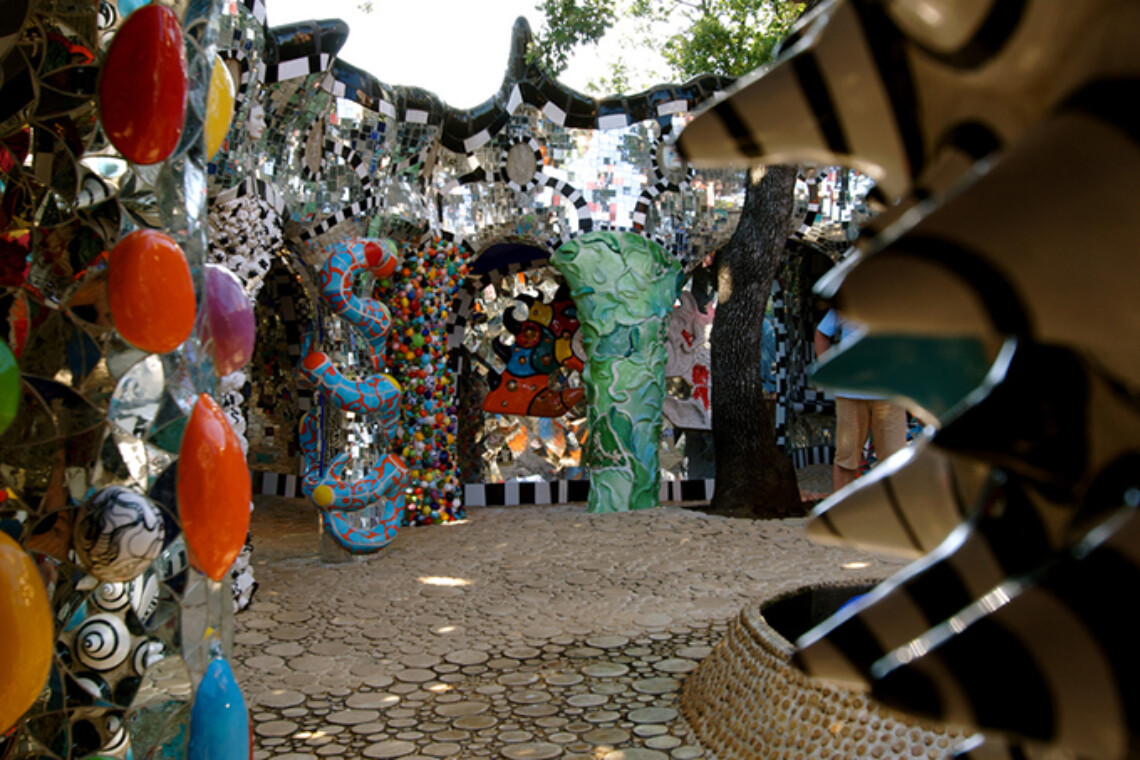
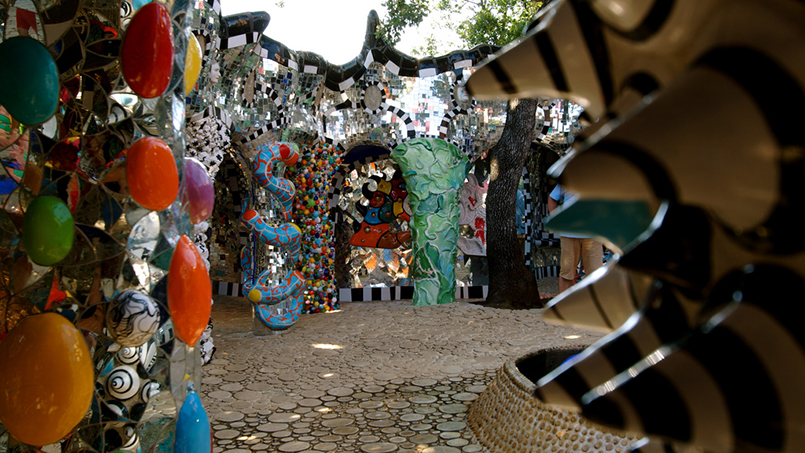
Another lifelong project! This time by French artist Niki de Saint Phalle, this sculpture garden took almost 20 years to complete and each monumental statue in it represent a card in the tarots (hence its name!). It’s an incredible place, bursting with colours and shining with mirrors – if you’re an Instagram fiend, this is the place for you!
How to visit Il Giardino dei Tarocchi: Use the park’s website to book tickets and keep in mind that it is only open to the public in the afternoons, and not after October 15th. The installation is located in between Pescia Fiorentina and Capalbio, in the south of Tuscany, and you can get to it by car following the Via Aurelia. Alternatively, you can take a train to Capalbio Scalo but service is infrequent and you will need to complete your journey by taxi or local bus.
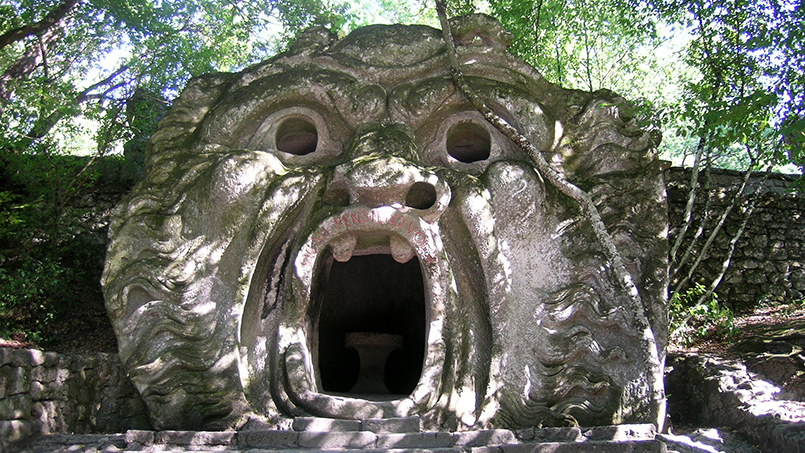
North of Rome, in the same territory as Villa Lante in Bagnaia (another recommended visit, although not odd at all… just beautiful!) the so called Park of the Monsters is very thematically close to La Scarzuola, in that his creator, Pier Francesco Orsini, wanted it to display his own philosophical and religious beliefs.
The execution is different, though, and not just because this pre-dates La Scarzuola by centuries: this 16th century park, littered with monstrous statues, took 25 years to build, as Orsini mourned the loss of his beloved wife Giulia – at least, that’s what historians want us to believe!
How to visit il Parco dei Mostri: The “Sacro Bosco“, as it’s also known, is a little more challenging to reach. While it’s not impossible to get here by public transport (local CoTral bus departing from Viterbo) we recommend to make your life easier by using a rental car or booking a chauffeur for the day.

For those of you who are visiting…
Read More


Join The Discussion